
Spleen problems
If you or your child does not have a working spleen and develops a fever, starts shivering or suddenly feels unwell, call triple zero (000) immediately and ask for an ambulance. Keep emergency antibiotics on hand and use them as instructed by your doctor while you seek immediate medical help.
Key facts
- The spleen helps protect you from infection and filters your blood.
- Some people are born without a spleen (asplenia) or have a spleen that does not work properly (hyposplenia or hyposplenism).
- Symptoms of spleen problems depend on what’s causing them and may include pain in the upper left side of the abdomen.
- Spleen problems may be caused by health conditions, injury or surgery.
- Vaccines and antibiotics may help lower your chance of serious complications from infections.
What is the spleen?
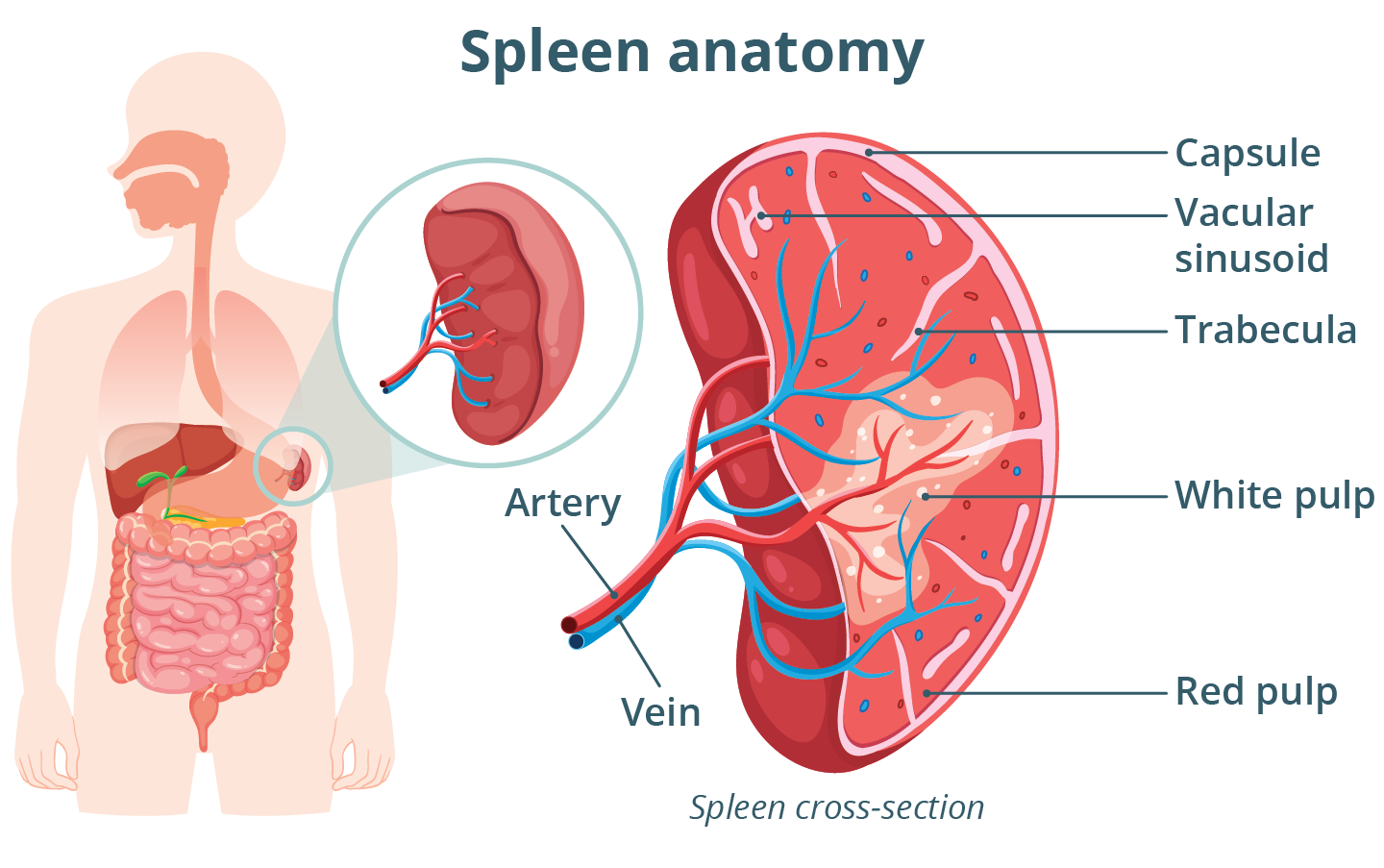
The spleen is an organ found in the upper left side of your abdomen (tummy).
Your spleen has 3 main roles:
- it filters your blood
- supports your immune system
- stores iron, red blood cells and platelets
This helps keep your blood healthy and protects you from infection.
What are spleen problems?
Spleen problems can affect the spleen’s size, position or how well it works.
Some people do not have a spleen. This is called asplenia.
Other people have a spleen that does not work properly. This is called hyposplenia or hyposplenism.
Other spleen problems include:
- splenomegaly — your spleen is bigger than normal, which is often a sign of another health problem
- hypersplenism — when your spleen becomes overactive and breaks down too many blood cells
- accessory spleen — you have a small extra spleen
- congenital polysplenia — you are born with several extra small spleens
- splenosis — small pieces of spleen tissue grow elsewhere in the abdomen after your spleen is injured
- splenoptosis — the spleen sits lower in your tummy than it should
What causes spleen problems?
Spleen problems may happen when the spleen is missing or does not work properly. Some people are born with spleen problems. Others develop them because of illness, injury or surgery.
Asplenia
Asplenia may happen if you were born without a spleen (congenital asplenia).
It may also happen because your spleen was removed during surgery called splenectomy.
Hyposplenia
Hyposplenia may be caused by:
- blood disorders — such as sickle cell disease and cancers of the blood or lymph system
- autoimmune conditions — such as systemic lupus erythematosus, rheumatoid arthritis and Hashimoto’s disease
- gastrointestinal diseases — such as coeliac disease and Crohn’s disease
- liver conditions and diseases
- conditions that affect blood flow to or from the spleen
- certain medicines
What are the symptoms of spleen problems?
Spleen problems do not always cause clear symptoms. Some people feel well and the problem is only found during a physical check or imaging scan. The symptoms you have depend on what’s causing the spleen problem.
When symptoms do happen, they may include:
- fever, shivering or chills — this can be a sign of infection
- feeling unwell
- pain or discomfort in the upper left side of your tummy, sometimes after an injury or fall
- yellowing of the skin or eyes (jaundice) — this may be linked to liver problems that affect the spleen
- easy bruising or bleeding
- swollen glands (lymph nodes) in the neck, armpits or groin
In some conditions, the spleen can suddenly trap large amounts of blood. This may cause sudden pain and make you feel unwell. This needs immediate treatment.
CHECK YOUR SYMPTOMS — Use the Symptom Checker and find out if you need to seek medical help.
When should I see my doctor?
See your doctor if you have sudden pain in the left upper side of your tummy. Also see your doctor if you have had an accident, fall or other injury to your tummy and notice pain.
See your doctor if you have spleen problems and plan to travel overseas. Ask for travel health advice about:
- malaria, salmonella and babesiosis (a rare parasitic infection spread by ticks)
- when to see a local doctor
- extra vaccines that you may need
When to seek urgent care
If you have sudden pain or discomfort in the left upper side of your abdomen (tummy) and feel unwell, call triple zero (000) immediately and ask for an ambulance.
See your doctor urgently if you are living with spleen problems and:
- have signs of an infection
- are bitten or scratched by an animal
- are travelling and think you may have symptoms of malaria or salmonella
Signs of an infection
Common signs and symptoms of infection include:
- fever over 38 ℃
- feeling cold, shivering and shaking
- diarrhoea, nausea and vomiting
- feeling very tired (fatigue)
- confusion
- shortness of breath
- severe headaches and muscle aches
If you don’t have a functioning spleen, you may get very sick quickly if these symptoms are ignored.
If you are unable to seek urgent medical attention, take your emergency supply of antibiotics as prescribed. Seek medical attention as soon as possible.
If you are living with spleen problems and have signs of an infection, call triple zero (000) immediately and ask for an ambulance.
How are spleen problems diagnosed?
Spleen problems are diagnosed through a physical check and tests.
Medical history and symptoms
Your doctor may ask about:
- your symptoms
- recent travel to areas where malaria is common
- family health history of blood disorders
Physical examination
An enlarged spleen may be felt during a tummy examination.
Tests
Tests may include:
- blood tests
- imaging tests — such as an ultrasound, MRI scan or CT scan
- immune tests — done by an immunology specialist
FIND A HEALTH SERVICE — The Service Finder can help you find doctors, pharmacies, hospitals and other health services.
How are spleen problems treated?
Treatment depends on what’s causing the spleen problem. Often, the condition causing the spleen problem is treated.
Medicines
Medicines may be used to treat the cause of your spleen problem. Autoimmune conditions may be treated with medicines that calm the immune system, such as corticosteroids.
Antibiotics are important for people without a working spleen. You may need daily antibiotics for several years, or for the rest of your life.
Surgery
A splenectomy is surgery to remove all or part of the spleen. It is usually only done when other treatments have not worked or when the spleen causes serious problems.
ASK YOUR DOCTOR — Preparing for an appointment? Use the Question Builder for general tips on what to ask your GP or specialist.
Living with spleen problems
If you are living with spleen problems, here are tips that may help:
- Learn the signs and symptoms of an infection.
- Learn when to use emergency antibiotics.
- Stay up to date with your vaccines.
- Have a written care plan and share it with your family and healthcare providers.
- Carry your medical alert card or wear a medical alert ID.
- Let all your doctors know you do not have a spleen.
- Seek travel advice before overseas travel.
If you or your child is living with spleen problems, family members and close contacts should also be fully vaccinated.
What are the complications of spleen problems?
Spleen problems, especially if your spleen is removed (splenectomy), may lead to complications.
Common complications include serious infections and blood clots. Other possible complications include anaemia or rupture of the spleen.
Serious infections
People living without a functioning spleen have a high chance of serious infections. This is because the spleen helps fight bacteria. Common infections include infections of the:
- lungs (pneumonia)
- blood (sepsis)
- brain (meningitis)
Infections may become severe quickly and may lead to a condition called overwhelming post-splenectomy infection (OPSI). This may be life-threatening.
Because you have a high chance of OPSI, prevention is important. These tips can help reduce your chance of serious infection:
- Stay up to date with your recommended vaccinations. You may need booster vaccines and a yearly flu vaccine. See your GP to review your vaccines.
- Take preventative antibiotics as prescribed. Some people may need antibiotics for several years. Others may need them for life. You should also have an emergency supply of antibiotics at home or when you travel.
If you are living with spleen problems and have signs of an infection, call triple zero (000) immediately and ask for an ambulance.
Travel-related infections
People without a functioning spleen are more likely to get sick from certain infections when travelling. These include:
- malaria
- salmonella
- babesiosis (a rare parasitic infection spread by ticks)
Animal bites and scratches
Bacteria live in the mouths or claws of animals like cats and dogs. These can be dangerous for people without a working spleen.
If you get bitten or scratched by an animal:
- wash the area straight away with soap and water
- apply an antiseptic
- watch for signs of infection, such as redness, swelling, pain or pus
- seek medical advice
Can spleen problems be prevented?
Many spleen problems cannot be prevented, for example if they happen because of another disease you can’t prevent. Some conditions that affect the spleen can be prevented, for example, some blood conditions.
Resources and support
- Spleen Australia has information and support for people living with spleen problems, including living without a functioning spleen, vaccinations, travel advice and help for families affected by spleen problems.
- HealthyWA has information about conditions that affect the spleen.
- NSW Health has information about care after spleen removal.
- Smart Traveller has the latest information and advice about travelling overseas.
You can also call the healthdirect helpline on 1800 022 222 (known as NURSE-ON-CALL in Victoria). A registered nurse is available 24 hours a day, 7 days a week.
Learn more here about the development and quality assurance of healthdirect content.
Last reviewed: January 2026