Sleep Mistakes | Sleep Health Foundation
This is a fact sheet about Sleep Mistakes. Getting a good night's sleep is essential for overall health and well-being, but many people make common sleep mistakes affecting a good night’s sleep.


Sleep is an essential function for all humans and animals, just like breathing and eating. When you sleep, your state of consciousness and responsiveness are temporarily reduced. Your body is mostly still, but your brain is active. When you sleep, your body goes through different processes that promote physical and emotional health and mental restoration.
Chronic sleep disturbances or disorders can have negative effects on your wellbeing and health.
Your body's circadian rhythm (or, internal biological 'clock') control when you feel sleepy and when you're typically awake. If this system is disrupted — such as due to shiftwork or jet lag — you can experience sleep problems.
Sleep problems are common. Up to 1 in 4 young Australians are unsatisfied with their sleep. Fortunately, there are things you can do to improve your sleep.
Your sleep is divided into cycles that last for about 90 minutes.
Each cycle is made up of 2 main phases:
During REM sleep:
During NREM sleep:
Adults usually spend about 20% of their night REM sleep and the remaining 80% in NREM sleep. Babies spend at least half of their sleep time in REM sleep.
Sleep is essential for your physical health and emotional wellbeing. It has many vital functions and allows your body to:
The amount of sleep you need varies with your age, lifestyle, genetics and any individual factors.
Most adults need about 7 to 9 hours of sleep each night to feel refreshed and to function at their best the next day.
Children and teenagers need more sleep than adults. As teenagers get older, they need less sleep. Most people's sleep needs stabilise at around 20 years old.
Older people spend more time in bed, but sleep more lightly for shorter spans of time. They usually need the same amount of sleep they needed in their younger adult life.
Lack of sleep can have a significant impact on your short-term functioning and your long-term health.
In the short-term you may notice the following:
In the long-term, sleep deprivation can increase your risk of:
Sleep problems can affect your health and safety. If you're feeling sleep deprived, see your doctor for advice.
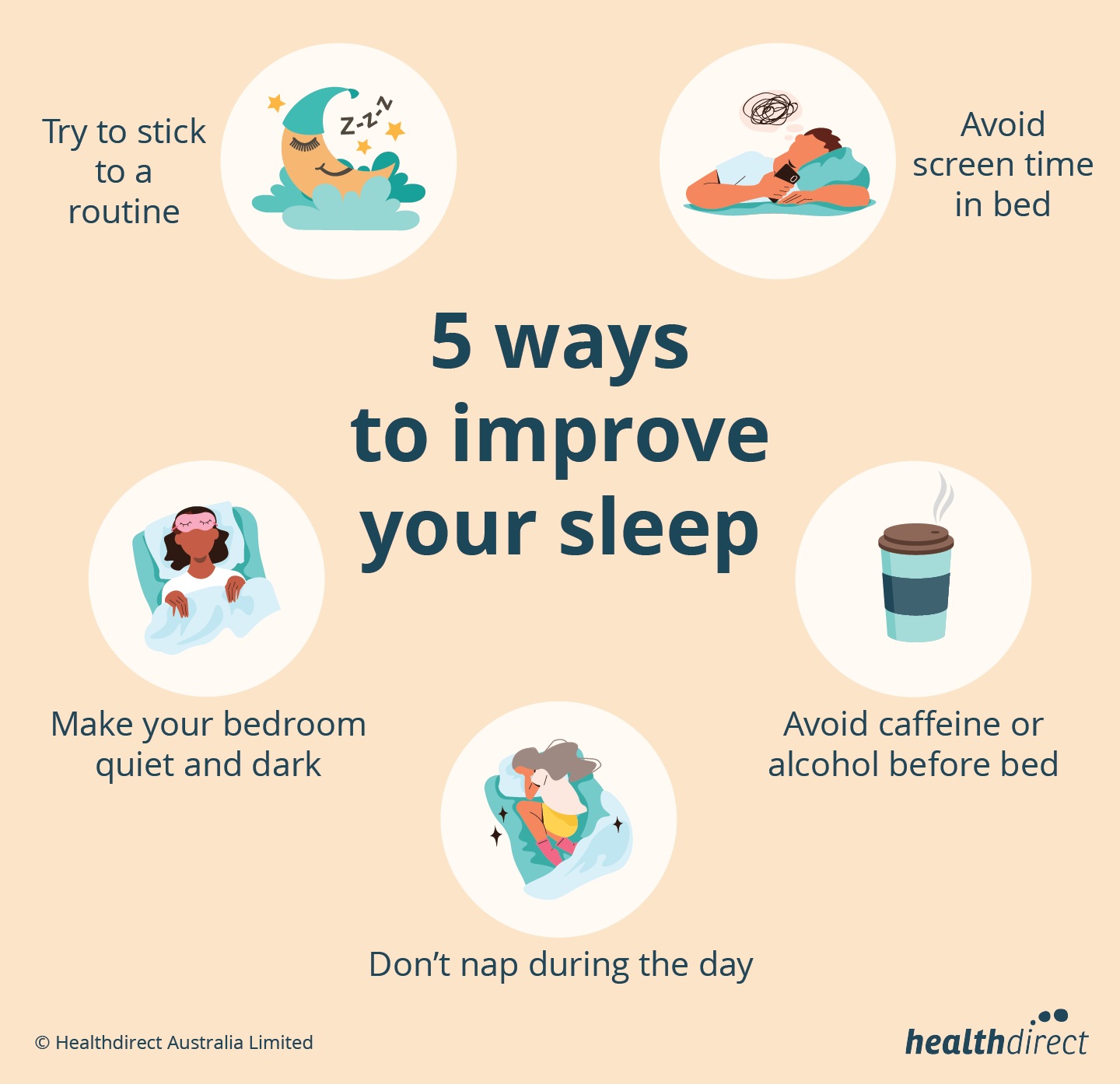
You can improve your sleep by practicing sleep hygiene. Sleep hygiene is a set of habits and environmental factors that you can change. While you cannot make yourself fall sleep, there are changes you can make to increase your chance of getting a good night's rest.
Help your body establish a healthy sleep routine by going to bed and waking up at around the same time each day.
Limit your time in bed to no more than 8 hours.
If it takes you a long time to fall asleep, try going to bed later.
Do not stay in bed if you are wide awake — get up and engage in a calming activity, such as reading, and avoid screens.
Computers, phones and TV can disrupt your sleep. Your mind needs to associate being in bed with sleeping rather than watching TV or using your phone or computer.
Establish a 'buffer zone' before bedtime when you're not trying to solve any problems or plan the next day.
Find a relaxation technique that works for you. Avoid using your computer or phone during your 'bedtime buffer zone'.
Avoid alcohol for at least 4 hours before bed. Alcohol might initially make you sleepy. It can also disrupt your sleep cycles leading to a poorer quality sleep.
Avoid tea, coffee and caffeinated soft drinks for at least 3 to 7 hours before going to bed.
Avoid cigarettes for at least 2 hours before going to bed. Nicotine is a stimulant and can stop you from sleeping well.
Sleeping during the day can make it more difficult to fall asleep at night.
If you really need to nap, limit your nap to 20 minutes.
Make sure you're awake for at least 4 hours before going back to bed.
If you can't sleep, checking the time can heighten your anxiety about not sleeping. If possible, take your clock out of your bedroom.
Sleeping pills don't usually address the causes of poor sleep. Sleeping pills should only be prescribed by a trusted doctor who fully understands the reasons why you might be struggling to get good quality sleep.
If you have been prescribed sleeping pills, use them for as short as period as possible, and try to address any underlying causes of your sleep difficulties.
If you regularly wake up not feeling refreshed, usually feel restless in bed, have trouble getting to sleep or find that being tired is affecting your mood, see your doctor.
As a shiftworker, your work hours do not follow a traditional daytime work schedule. You may be working against your natural circadian cycle which disrupts your sleep patterns. This can have a negative impact on your physical and mental health.
Shiftworkers often report difficulty sleeping during the day. They are more tired during and after their shifts. This can result in a poorer work performance. Therefore, it is important to establish healthy sleeping habits as much as possible.
If you are a shiftworker, here are some tips to help you sleep better:
If you think you might suffer from a sleep disorder, such as insomnia or sleep apnoea, seek advice from your doctor.
Find out how we develop and review our content.
Last reviewed: November 2023


Worried about your health?
Select a symptom, answer some questions, get advice


