Shingles — infographic
Shingles is a viral infection that causes a painful blistering rash. It is caused by the varicella-zoster virus, which is the same virus that causes chickenpox. You can only get shingles if you have had chickenpox in the past.
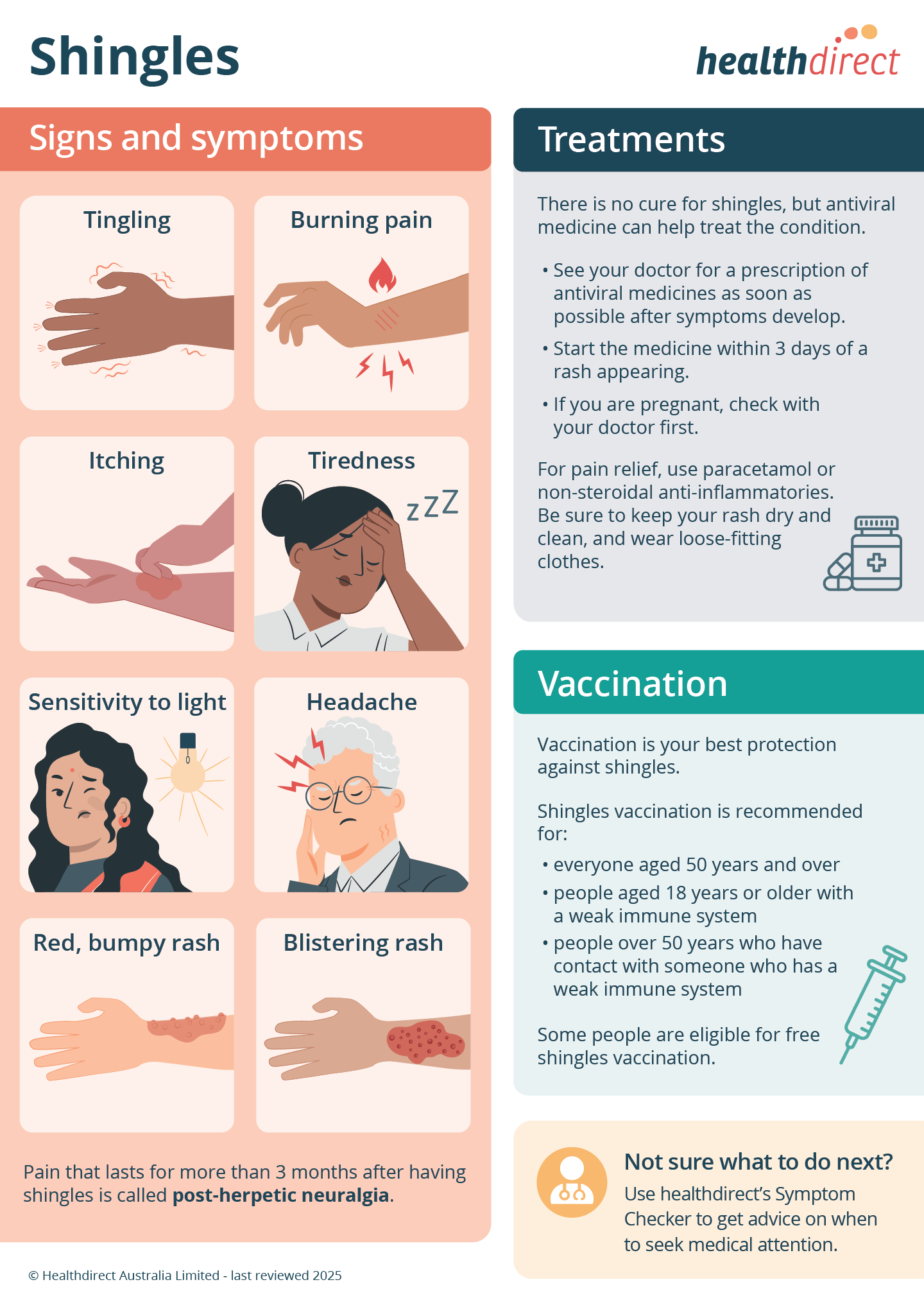
View text version of infographic
Signs and symptoms
- tingling
- burning pain
- itching
- tiredness
- sensitivity to light
- headache
- red, bumpy rash
- blistering rash
Pain that lasts for more than 3 months after having shingles is called post-herpetic neuralgia.
Treatment
There is no cure for shingles, but antiviral medicine can help treat the condition.
- See your doctor for a prescription of antiviral medicines as soon as possible after symptoms develop.
- Start the medicine within 3 days of a rash appearing.
- If you are pregnant, check with your doctor first.
For pain relief, use paracetamol or non-steroidal anti-inflammatories. Be sure to keep your rash dry and clean, and wear loose-fitting clothes.
Vaccination
Vaccination is your best protection against shingles.
Shingles vaccination is recommended for:
- everyone aged 50 years and over
- people aged 18 years or older with a weak immune system
- people over 50 years who have contact with someone who has a weak immune system
Some people are eligible for free shingles vaccination.
Not sure what to do next?
Use healthdirect's Symptom Checker to get advice on when to seek medical attention.
More information
You might be interested in these topics as well:
Learn more here about the development and quality assurance of healthdirect content.
Last reviewed: December 2025