
Polyendocrine metabolic ovarian syndrome (PMOS) | Better Health Channel

In May 2026, polycystic ovary syndrome (PCOS) was officially renamed polyendocrine metabolic ovarian syndrome (PMOS). The new name better reflects the condition, but its diagnosis and treatment have not changed. This article will be updated to reflect the new name when Australian guidelines are updated over the coming years. You may see both names used during this period.PCOS to PMOS name change: what you need to know
Polycystic ovarian syndrome (PCOS) is a common hormonal condition that affects how your ovaries work. It can start as early as the teenage years and may lead to:
PCOS is one of the most common causes of infertility in females. Many people don't know they have it, as PCOS is often not diagnosed.
While PCOS can't be cured, you and your doctor can manage many of its symptoms.

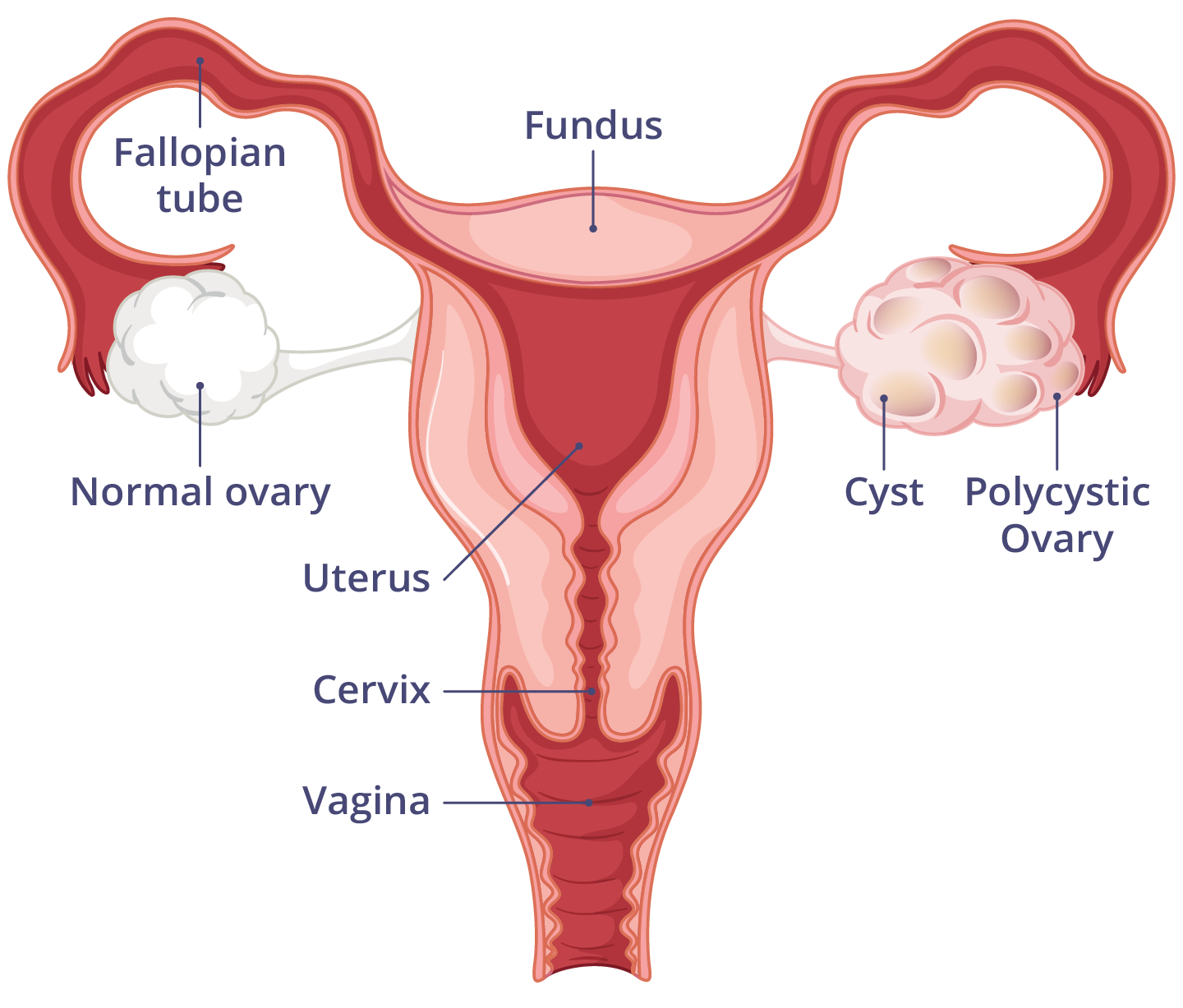
Illustration of the female reproductive system showing a normal ovary and a polycystic ovary.
PCOS affects the ovaries and hormones in your body. This can lead to a wide range of symptoms that can affect your skin, menstrual cycle and overall health.
The condition can look different for each person. Some symptoms are visible, while others may not be as noticeable.
PCOS can lead to visible changes in your appearance and skin. These symptoms may include:
Some symptoms of PCOS are inside your body. They may be more difficult to notice but can affect your health and wellbeing. These symptoms may include:
The exact cause of PCOS is unknown. It is thought to happen due to a mix of genetic (inherited), hormonal, lifestyle and environmental factors.
These causes often combine, making PCOS different for everyone.
It's important you see a doctor if you think you might have PCOS. Early diagnosis and treatment can help you feel better and lower your risk of long-term health issues.
You should see your doctor if:
Talk to your doctor if you need help to manage your weight. They can refer you to the right health professional, such as a dietitian or exercise specialist.
To diagnose PCOS, your doctor may ask about your symptoms and medical history. They may also refer you for tests. They may also try to rule out other conditions that could cause similar symptoms.
Diagnosing PCOS may be difficult because symptoms can vary widely. You don't need to have all the symptoms to be diagnosed with the condition.
Your doctor may use specific criteria to diagnose PCOS. At least 2 of the following must be present:
To confirm PCOS and rule out other conditions, your doctor may refer you for tests such as:
Treatment for PCOS focuses on:
Treatment options may include lifestyle changes and medicines. Shaving, waxing, laser therapy or electrolysis may help you to remove unwanted body hair.
A healthy lifestyle is important to manage PCOS. Here are some tips that may help:
There are several different medical therapies to help manage PCOS symptoms. These therapies include:
Living with PCOS means managing both physical and emotional challenges. With the right care, you can lead a normal life. Treatments and lifestyle changes, such as staying active and eating well, can help improve your symptoms.
It's also important to seek support for emotional concerns, such as anxiety or depression. Speak with your doctor to make sure you're getting the support you need for both your physical and emotional well-being.
PCOS can affect your long-term health if left untreated. It may increase your risk of health problems such as:
PCOS cannot be completely prevented. This is because its exact causes are not fully understood and factors that you cannot change, such as genetics, may play a role.
Maintain a healthy lifestyle to help lower your risk of developing complications. Manage your symptoms and attend regular follow up appointments with your doctor. This may help reduce your chance of developing complications or help you recognise them early.
You can also call the healthdirect helpline on 1800 022 222 (known as NURSE-ON-CALL in Victoria). A registered nurse is available 24 hours a day, 7 days a week.
Jean Hailes for Women's Health offers PCOS fact sheets in multiple languages (Opens in new tab).
Jean Hailes for Women's Health provides a booklet for Aboriginal and/or Torres Strait Islander people (Opens in new tab).
Find out how we develop and review our content.
Last reviewed: December 2024


rendition-574c0b.png)


Worried about your health?
Select a symptom, answer some questions, get advice