
Tubal removal or ligation
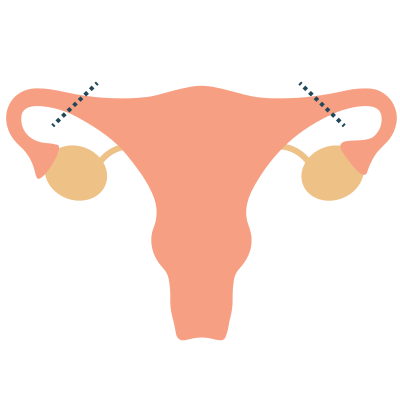
A surgical procedure that permanently blocks or cuts through a small part of the fallopian tubes.
Overview
Does it have any other names?
Tubal occlusion, laparoscopic sterilisation, female sterilisation, ‘having your tubes tied’.
What is it?
A surgical procedure that blocks or cuts through a small part of the fallopian tubes.
Tubal ligation is a permanent way to prevent pregnancy.
What can it be used for?
- Preventing pregnancy.
How it works
How does it work?
Tubal ligation is a surgical procedure usually done under general anaesthetic. During the procedure, the fallopian tubes are either cut and tied or blocked with clips. This prevents the eggs from travelling from the ovaries to the uterus. This means there are no eggs for sperm to fertilise.
Tubal ligation does not change your hormones or your periods. It does not start or cause menopause.
How quickly does it start working?
Tubal ligation starts working straight away to prevent pregnancy.
You can start having sex as soon as you are ready, although your healthcare professional may advise you to avoid sex for a certain period while you are recovering from the procedure.
Effectiveness
How effective is it at preventing pregnancy?
99.5% effective.
What does perfect use look like?
For tubal ligation to be as effective as possible, it needs to be performed correctly, and appropriate recovery advice should be followed. This means:
- have the procedure performed by a trained clinician
- follow post-procedure care instructions
Does anything decrease its effectiveness at preventing pregnancy?
When done correctly, tubal ligation is one of the most effective forms of contraception. Medicines and everyday activities do not affect how well it works.
However, in rare cases, the tubes can sometimes grow back together or form a new passage. Your specialist will discuss this with you.
Does it prevent sexually transmitted infections (STIs)?
No.
Internal and external condoms are the only types of contraception that protect against STIs.
Usage and considerations
How frequently does it need to be used or replaced?
Tubal ligation is a permanent procedure that will only need to be done once.
Will anyone be able to detect if I am using this method of contraception?
You and your partner(s) may be able to see the surgical wounds or scars from the procedure.
Safety and side effects
Are there any side effects?
Most people do not have serious side effects, but some side effects can occur following the procedure. These can include:
- abdominal pain or cramping
- bloating
- fatigue
- nausea or dizziness from the anaesthetic
- light vaginal bleeding or wound discomfort
As with any medical procedure, there is a risk of rare but serious complications. See a healthcare professional if you experience:
- burning when you pee
- red, painful area around the wound that doesn’t improve
- worsening abdominal pain that doesn’t improve
- swollen leg/s or difficulty bearing weight
Are there any health conditions or lifestyle factors that might prevent me from using this type of contraception?
There are no lifestyle factors which prevent tubal ligation.
Most health conditions do not prevent you from being able to have tubal ligation. However, some medical factors may mean the procedure is not suitable at that time, or extra care or planning is required. Your specialist will discuss this with you.
Access and cost
How do I access it?
You will need a referral from your GP to a gynaecologist. Tubal ligation is performed in both the public and private health systems. Wait times in the public system are almost always longer than in the private system.
What costs do I need to consider?
If you get tubal ligation through the public health system, there will generally be no out-of-pocket costs for the procedure. However, wait times will most likely be longer than in the private system. While some healthcare professionals bulk bill (which means you won’t pay anything to see them), some may charge out-of-pocket costs for the initial appointments.
If you get tubal ligation through the private health system, you will generally have out-of-pocket costs between $3000–4000. You may get a rebate from your private health insurance if you are covered for this procedure.
Fertility and future planning
Will it impact my future fertility?
Yes. Tubal ligation is a permanent procedure which makes you unable to get pregnant.
While it may be possible to reverse tubal ligation, success rates vary and reversal cannot be guaranteed.
Can I use this type of contraception after having a baby?
Yes, tubal ligation can be performed at an appropriate interval after pregnancy. In some instances, tubal ligation can be completed at the same time as a caesarean section. In this situation, counselling and agreement should be given at least 2 weeks in advance of the procedure.
Discuss tubal ligation with your healthcare professional if you think this is the right choice for you.
Disclaimer
Last reviewed: August 2026