
Progestogen-only pill - ‘the mini-pill’
A daily pill containing one hormone (progestogen).
Overview
Does it have any other names?
The mini-pill
What is it?
A daily tablet that contains one hormone (progestogen). The mini-pill has a smaller amount of progestogen than other oral contraceptives.
There are 3 types of mini-pills available in Australia. They each contain a different type of progestogen. These are:
- levonorgestrel
- norethisterone
- drospirenone
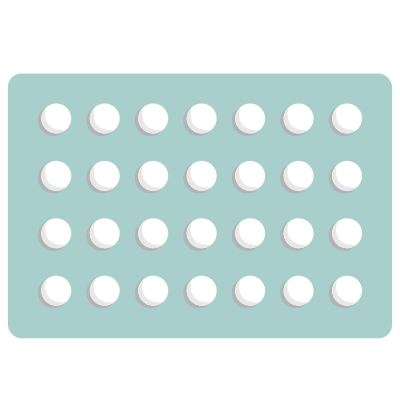
Your pill packet may contain:
- levonorgestrel pills: 28 active hormone pills (no sugar pills)
- norethisterone pills: 28 active hormone pills (no sugar pills)
- drospirenone pills: 24 active hormone pills and 4 sugar pills
You might have to try a few different pills before you find the one that feels right for you.
What can it be used for?
- preventing pregnancy
- regulating periods.
How it works
How does it work?
The mini-pill works by thickening cervical mucus so sperm can’t get through to the fallopian tubes to fertilise an egg. The drospirenone pill also stops ovulation (eggs being released from the ovaries).
How quickly does it start working?
The mini-pill can start working quickly to prevent pregnancy, but the timing depends on when you start taking it in your cycle.
Levonorgestrel and norethisterone:
If you start these pills within the first 5 days of your period starting, you are protected straight away.
If you start these pills more than 5 days after your last period started, you need to take the active pills for 3 days in a row before you are protected. Use backup contraception (e.g. condoms) or avoid having sex for those first 3 days to prevent pregnancy.
Drospirenone:
If you start these pills on the first day of your period starting, you are protected straight away.
If you start these pills after the first day of your period, you need to take the active pills for 7 days in a row before you are protected. Use backup contraception (e.g. condoms) or avoid having sex for those first 7 days to prevent pregnancy.
Effectiveness
How effective is it at preventing pregnancy?
Typical use: 93% effective
Perfect use: 99.7% effective
What does perfect use look like?
- Take one pill at the same time every day
- Don’t skip active pills
- Start new packs on schedule after finishing previous packs
Some people set alarms or reminders to help them to remember to take their pill every day.
Does anything decrease its effectiveness at preventing pregnancy?
The mini-pill is less effective if you:
- miss active pills
- have vomiting or severe diarrhoea
Levonorgestrel and norethisterone pills must be taken within the same 3-hour time frame each day, otherwise it is considered ‘missed’. Drospirenone is only considered ‘missed’ if it is more than 24 hours late.
The information sheet that comes in the mini-pill packet will give you instructions on what to do if this happens. In these instances, you may need to use another form of contraception (e.g. condoms) to prevent pregnancy, or avoid having sex, until you’re back on track.
Some medicines reduce the effectiveness of the mini-pill, including some epilepsy medications.
It is best to check with a healthcare professional if any new or current medications or supplements you take will decrease the effectiveness of the mini-pill.
Does it protect against sexually transmitted infections (STIs)?
No.
Internal and external condoms are the only types of contraception that protect against STIs.
Usage and considerations
How frequently does it need to be used or replaced?
The mini-pill needs to be taken daily.
Prescriptions can last between 3–12 months. Some healthcare professionals may provide a repeat prescription to reduce how often you need to see them.
Will anyone be able to detect if I am using this type of contraception?
It is possible to be discreet while using the mini-pill.
However, it is possible someone might notice pill packets, reminder alarms, or see you taking it.
Safety and side effects
Are there any side effects?
As with all medications, some people may experience side effects.
Some possible side effects include:
- nausea
- headaches
- sore breasts
- spotting (light bleeding that is not your period)
- irregular bleeding
- longer periods
- acne
- tiredness
Side effects vary between different mini-pills and different people. Some people experience no side effects or experience positive changes while on the mini-pill. Side effects can settle after a few months. If the side effects of a certain mini-pill bother you, you may want to try a different mini-pill or a different type of contraception.
Are there any health conditions or lifestyle factors that might prevent me from using this type of contraception?
Some common health conditions and lifestyle factors that may stop you from using the mini-pill include:
- being over 55 years of age
- history of stroke
- heart disease (current or past)
- breast cancer (current or past)
- severe liver disease or cancer
- taking certain types of anti-epileptic or seizure medication
It is important to talk with a healthcare professional about your full medical history when deciding which contraception option is the safest and most suitable for you.
Access and cost
How do I access it?
You will need a prescription. You can get one from a doctor (either a GP or relevant specialist, e.g. a gynaecologist), nurse practitioner or pharmacist (in some states and territories). They should ask you questions about your medical history and might do some tests to ensure that the mini-pill is a safe option for you before prescribing.
It is possible to get a prescription at:
- a GP clinic
- a specialist appointment
- a telehealth appointment (online or over the phone)
- sexual health clinics
- family planning clinics
- pharmacies (in some states and territories)
Once you have a prescription, the mini-pill can be bought at most pharmacies, including online pharmacies.
What costs do I need to consider?
Currently, all versions of the mini-pill are listed on the Pharmaceutical Benefits Scheme (PBS), which makes them cheaper for those who hold a current Medicare card.
Each repeat of a prescription usually lasts for 3–4 months but can vary. Costs for each repeat are:
- PBS-listed pills: up to $25
- PBS-listed pills for concession card holders: up to $7.70
- Private prescription: $12–$60
Although some healthcare professionals bulk bill (which means you won’t pay anything to see them), some may charge out-of-pocket costs for the appointment needed to get your prescription.
Fertility and future planning
Will it impact my future fertility?
No, the mini-pill has no impact on long-term fertility.
Your fertility should return to normal soon after you stop taking the mini-pill, but your menstrual cycle might take a little while to settle.
Can I use this type of contraception after having a baby?
You can start using the mini-pill straight after having a baby, even if you are breastfeeding. You should start using the mini-pill within 21 days of giving birth to avoid pregnancy.
Disclaimer
Last reviewed: August 2026