Adenoid removal (adenoidectomy) factsheet
Adenoids are soft tissue that sit at the back of the nose. The procedure to remove adenoids in children is called an adenoidectomy.


Adenoidectomy is surgery to remove enlarged adenoids.
Adenoids are small lumps of soft tissue found at the back of your nasal passage. Adenoids are part of the immune system. They help protect your nose and throat from infection.
Adenoidectomy is usually a short and safe procedure. It is one of the most common operations children have. Your child may feel some pain after their procedure for a couple of days.
Often, an adenoidectomy is done at the same time as a tonsillectomy (surgery to remove the tonsils). When done in a single surgery, this procedure is called an adeno-tonsillectomy.
Sometimes during an adenoidectomy, the doctor will insert grommets (small tubes) into the ears to help prevent future ear infections (Opens in new tab).
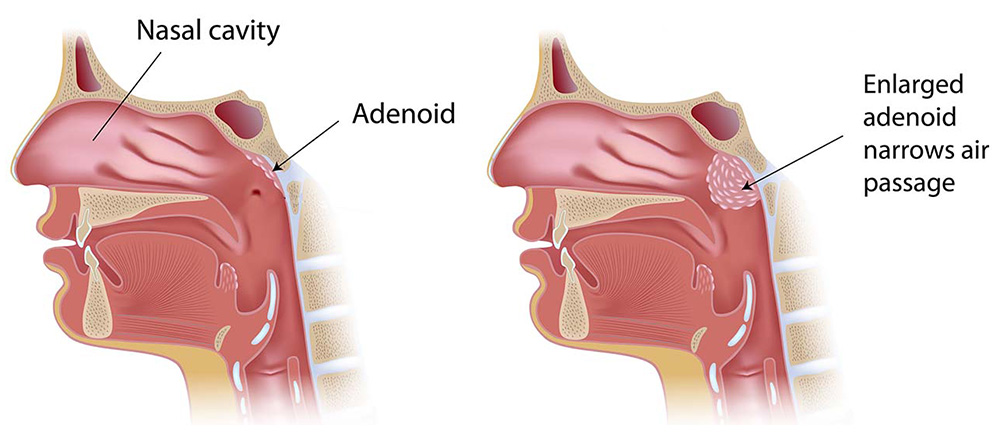
An enlarged adenoid can cause breathing and sleep problems.
If your child has enlarged or infected adenoids, an adenoidectomy can help improve symptoms such as:
When your child has an adenoidectomy, they will be put to sleep under a general anaesthetic. The surgery is usually quick.
There are a few different ways to do an adenoidectomy. Your child's doctor will assess them to decide which option is best for them. They will explain the procedure to you and what it will involve for you and your child, so you know what to expect.
Your child's healthcare team will give you instructions on how to prepare for an adenoidectomy. As part of their preparation, your child may need some medical tests, including a physical examination and some tests to check their lungs.
Your child may be asked not to eat or drink for some hours before the operation.
Read more about preparing for surgery.
After your child’s surgery, they will be monitored. Depending on your child’s medical history, they may go home after a few hours if they are recovering well without any signs of complications. Sometimes, children may need to stay in hospital overnight.
Your child will be encouraged to eat as soon as possible after waking up. There are no restrictions on what your child can eat after surgery.
Your child may also need some medicines to help manage pain after their surgery. Most children will be fully recovered 2 days after surgery.
Before going home, your child’s healthcare team will explain how to give them pain medicines safely. They will discuss the signs of complications and what to do if they occur.
Your child will have a follow-up appointment after surgery so their doctor can check their recovery.
Adenoidectomy is known to be a safe surgery and the risk of complications is low.
Rare complications include:
Possible alternatives to an adenoidectomy include:
Your child's doctor will usually recommend an adenoidectomy after your child has tried the other treatment options.
As part of shared decision making (Opens in new tab), together with your child's doctor you can discuss their health and decide which treatment option is best for them. This way you can make an informed decision.
What will happen to your child if you decide they should not have an adenoidectomy or it is delayed depends on why they need the surgery, as well as their general health.
It is best to discuss your options with their healthcare team. They can explain to you the risks and benefits for your child.
Read more about adenoidectomy (Opens in new tab) on the Sydney Children's Health Network website.
Learn how to care for your child when they go home after an adenoidectomy (Opens in new tab).
SA Health has information for parents and caregivers about tonsillectomy and adenoidectomy (Opens in new tab).
The Royal Children's Hospital Melbourne has translated their tonsillectomy and adenoidectomy fact sheet into many community languages.
Perth Children's Hospital has resources called Keeping our Mob Healthy – Child Health Facts (Opens in new tab) for Aboriginal and/or Torres Strait Islander peoples.
Find out how we develop and review our content.
Last reviewed: June 2026
Worried about your health?
Select a symptom, answer some questions, get advice