Cochlear Implants | Hearing at any age | Ear Science Institute Australia
Cochlear implants can restore hearing at any age. Learn about candidacy, the process and outcomes with Ear Science Institute.


A cochlear implant is a small electronic device that's put in your inner ear, to help you hear better. The implant triggers your hearing nerve to provide sound signals to your brain.
Cochlear implants are also known as 'bionic ears'.
If you have hearing loss, a cochlear implant may help you:
The cochlear implant has 2 parts: external and internal.
The external part is a sound processor that sits behind your ear. It looks like a hearing aid and runs on batteries. It has small microphones that pick up sounds and send them through the side of your skull to the internal part of the implant.
The internal part is an implant, which is fitted by a surgeon. It picks up signals from the sound processor and triggers the nerve fibres in your inner ear. The nerve signals travel to your brain, where they are turned into sound.
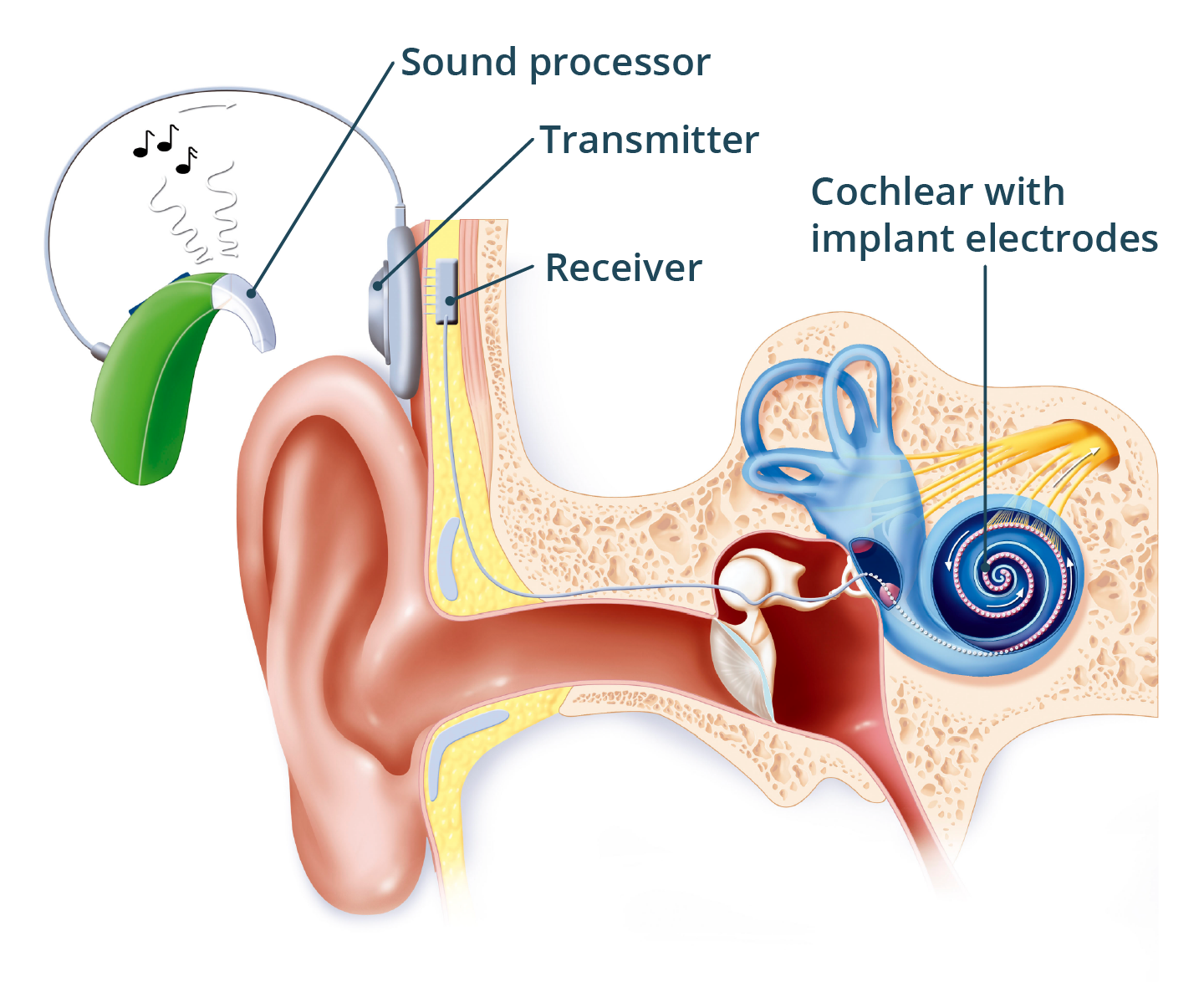
The sound processor captures sound and sends electrical signals through the transmitter to the implant. Then these signals trigger the cochlea's hearing nerve, sending the impulses to the brain.
A cochlear implant can help adults and children who have sensorineural deafness. This means that part of your inner ear isn't work properly.
The cochlear implant goes around the damaged area of the inner ear.
It's suitable for people who:
If your child was born with severe hearing loss (Opens in new tab), having a cochlear implant fitted early helps them develop spoken language skills.
The earlier your child gets treatment, the better they can pick up language and learn to speak. Language skills will help them learn at school and talk to others.
The implants can be put into babies as young as 6 months old.
A hearing aid makes sounds louder, so you can hear them better through your ear. However, this may not be enough if your inner ear is badly damaged.
A cochlear implant sends sound signals straight to your hearing nerve.
If you are having a cochlear implant fitted, you will need to see a team of specialists. They might include:
The specialist team will examine you. Tests may include:
The team might recommend a cochlear implant in one or both ears.
You might want to talk to people who already have a cochlear implant. Ask your team to suggest a local support group.
Learn more about how to prepare for surgery here.
To get a cochlear implant fitted, you will need to have a general anaesthetic.
The surgeon will make a small cut behind your ear and insert the implant.
Once it is in place, your health team will check the implant is working. The procedure takes 1 to 3 hours.
You will probably need to stay in hospital overnight.
See your doctor immediately if you develop an ear infection or fever. You might need antibiotics to prevent the infection spreading or causing meningitis.
Most people have minor discomfort only. You might have some vertigo or ringing in your ears.
The cochlear implant will be switched on after your wound has healed. This could be between 1 day and 6 weeks after surgery.
An audiologist will adjust the device to improve your hearing. This usually takes several sessions.
It might take a while before you can hear clearly. Rehabilitation will involve an audiologist or a speech therapist. This helps train your brain to learn to understand what sounds mean.
If you have used hearing aids in the past, sounds may be different with a cochlear implant. With time and practice, your hearing will get better and easier.
See your ENT specialist if you have discharge from your ear, watery nasal discharge or any other ear symptoms.
It's important to talk about the benefits and risks with your surgeon before deciding to have the procedure. Most of the time there are no complications, but there are some risks including:
There are vaccines available, which can lower your risk of getting meningitis. You will be advised to have these vaccines if you haven't already had them.
There are some things you can do to look after your implant:
Your treating team will give you safety instructions for a range of situations that might affect your implant.
Visit Aussie Deaf Kids (Opens in new tab) for more information about cochlear implants for your child.
The Department of Health Hearing Services Program (Opens in new tab) can help you check if you are eligible for hearing support services.
You should talk to your health professional about the benefits and risks of getting a medical implant. Use the Therapeutic Goods Administration's guide (Opens in new tab) on what to ask. The information is in English, Arabic, Croatian, Farsi, Greek, Italian, Korean, Mandarin, Spanish, Turkish and Vietnamese.
You can also call the healthdirect helpline on 1800 022 222 (known as NURSE-ON-CALL in Victoria). A registered nurse is available to speak with 24 hours a day, 7 days a week.
Find out how we develop and review our content.
Last reviewed: May 2025


Worried about your health?
Select a symptom, answer some questions, get advice
