
Erythromycin (Mayne Pharma)™
Active ingredients: erythromycin
Pack: Erythromycin (Mayne Pharma) 250 mg enteric capsule, 25, bottle
Consumer medicine information
Read the CMI leaflet (Opens in new tab) for facts you need to know before, during and after taking your medicine.
For more information about CMIs and how to read them, please visit How to read Consumer Medicine Information (CMI).
What this medicine is used for
MAYNE PHARMA ERYTHROMYCIN is indicated in children and adults for the treatment of the following conditions: Upper respiratory tract infections of mild to moderate degree caused by Streptococcus pyogenes (group A beta haemolytic streptococci), Streptococcus pneumoniae (Diplococcus pneumoniae). Lower respiratory tract infections of mild to moderate severity caused by Streptococcus pyogenes (group A beta hemolytic streptococci), Streptococcus pneumoniae (Diplococcus pneumoniae), acute and chronic bronchitis, pneumonia. Sinusitis caused by Streptococcus pneumoniae, Streptococcus pyogenes. Otitis media due to Streptococcus pneumoniae, Streptococcus pyogenes. Respiratory tract infections due to Mycoplasma pneumonia (Eaton's agent). Skin, and skin structure infections of mild to moderate severity caused by Streptococcus pyogenes and Staphylococcus aureus (resistant staphylococci may emerge during treatment). Bordetella pertussis: Erythromycin produces early elimination of the causative organism from the nasopharynx although the clinical course of the disease is not altered; therapeutic doses should be continued for at least 10 days. Diphtheria: As an adjunct to antitoxin infections due to Corynebacterium diphtheriae, to prevent establishment of carriers and to eradicate the organism in carriers. Erythrasma: In the treatment of infections due to Corynebacterium minutissimum. Infections due to Listera monocytogenes. Non-gonococcal Urethritis: Chlamydia trachomatis and Ureaplasma urealyticum have been shown to be sensitive to erythromycin and clinical studies have demonstrated its efficacy in urethritis due to these organisms. A minimum of 10 days therapy appears to be required. Chlamydia trachomatis infection (excluding Non-gonococcal urethritis): Erythromycin has been shown to be effective in the treatment of trachoma or inclusion-body conjunctivitis and pneumonia in infants caused by Chlamydia trachomatis. Campylobacter fetus (subspecies) jejuni: Infections due to this organism when antibiotic therapy is indicated. Primary syphilis caused by Treponema pallidum: Erythromycin (oral forms only) is an alternative choice of treatment for primary syphilis in patients allergic to the penicillins. In the treatment of primary syphilis, spinal fluid should be examined before treatment and as part of the followup after therapy. Legionnaires' disease caused by Legionella pneumophila: Although no controlled clinical efficacy studies have been conducted, in vitro and limited preliminary clinical data suggest that erythromycin may be effective in treating Legionnaires' Disease. Prevention of initial attacks of rheumatic fever: Penicillin is considered by the American Heart Association to be the drug of choice in the prevention of initial attacks of rheumatic fever (treatment of group A beta - haemolytic streptococcal infections of the upper respiratory tract e.g. tonsillitis or pharyngitis). Erythromycin is indicated for the treatment of penicillin allergic patients. A therapeutic dose should be administered for 10 days. Prevention of Recurrent Attacks of Rheumatic Fever: Penicillin or sulphonamides are considered by the American Heart Association to be the drugs of choice in the prevention of recurrent attacks of rheumatic fever. In patients who are allergic to penicillin and sulphonamides, oral erythromycin is recommended by the American Heart Association in the long term prophylaxis of streptococcal pharyngitis (for the prevention of recurrent attacks of rheumatic fever). Prevention of bacterial endocarditis: Although no controlled clinical efficacy trials have been conducted, oral erythromycin has been suggested by the American Heart Association and the American Dental Association in a regimen for prophylaxis against bacterial endocarditis in patients sensitive to penicillin who have congenital heart disease, or rheumatic or other acquired valvular heart disease when they undergo dental or surgical procedures of the upper respiratory tract. Erythromycin is not suitable prior to genitourinary or gastrointestinal tract surgery.
Source: ARTG
Storage conditions
- Shelf lifetime is 18 Months
- Store below 25 degrees Celsius
Source: ARTG
How to use this medicine
Non-composite pack
This medicine contains one component only.
Component
- Capsule, enteric
- Oral
- a red/yellow gelatin capsule printed Eryc in black, filled with white spheroidal pellets
Source: ARTG
Images
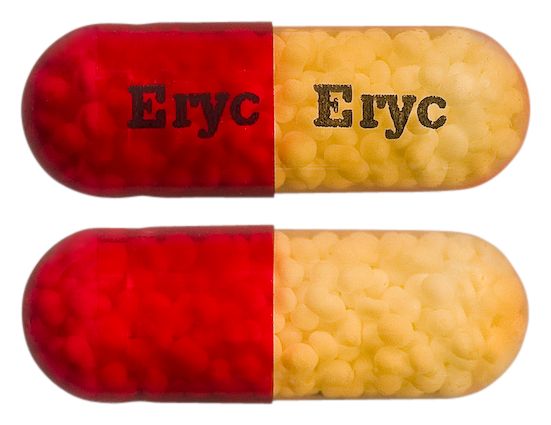
Images © Medicines Information Pty Ltd.
Do I need a prescription?
These medicine packs are available from a pharmacist and requires a prescription. It is Schedule 4: Prescription Only Medicine.
- 25
Source: ARTG
Is this medicine subsidised?
This medicine was verified as available on the Pharmaceutical Benefits Scheme (PBS) on 1 August 2026, under the following PBS item codes:
Ask your pharmacist or doctor about your eligibility
Source: PBS
Pregnant or planning a pregnancy?
For the active ingredient: erythromycin
This medicine is generally considered safe during pregnancy if taken as directed. During pregnancy, you should discuss your medicine use with your doctor or pharmacist.
Source: AHT
Reporting side effects
If you experience a side effect from this medicine, tell your doctor or pharmacist. Or report it directly to the TGA (Therapeutic Goods Administration).
You can report side effects to your doctor, or directly at Report an adverse event or safety problem (Opens in new tab)
Source: ARTG
Data sources
- Australian Health Thesaurus (AHT) (Opens in new tab) – Last updated on 3 August 2026
- Australian Medicines Terminology (AMT) (Opens in new tab) – Last updated on 3 August 2026
- Australian Register of Therapeutic Goods (ARTG) (Opens in new tab) – Last updated on 3 August 2026
- Pharmaceutical Benefits Scheme (PBS) (Opens in new tab) – Last updated on 3 August 2026
- Medicines Information Pty Ltd (Opens in new tab) – Last updated on 4 March 2026
Disclaimer
Healthdirect medicines information is not intended for use in an emergency. If you are suffering an acute illness, overdose, or emergency condition, call triple zero (000) and ask for an ambulance.
Reasonable care has been taken to provide accurate information at the time of creation. This information is not intended to substitute medical advice, diagnosis or treatment and should not be exclusively relied on to manage or diagnose a medical condition. Please refer to our terms and conditions (Opens in new tab).
Symptom Checker
Worried about your health?
Select a symptom, answer some questions, get advice