
Kapanol™
Active ingredients: Morphine
Consumer medicine information
Read the CMI leaflet (Opens in new tab) for facts you need to know before, during and after taking your medicine.
For more information about CMIs and how to read them, please visit How to read Consumer Medicine Information (CMI).
What this medicine is used for
Management of Severe Pain KAPANOL 10, 20, 50 and 100 mg capsules are indicated for the management of severe pain where: other treatment options have failed, are contraindicated, not tolerated or are otherwise inappropriate to provide sufficient management of pain, and the pain is opioid-responsive, and requires daily, continuous, long-term treatment. KAPANOL is not indicated for use in chronic non-cancer pain other than in exceptional circumstances. KAPANOL is not indicated as an as-needed (PRN) analgesia.,Symptom Reduction of Chronic Breathlessness KAPANOL 10 and 20 mg capsules are indicated for the symptomatic reduction of chronic breathlessness in the palliative care of patients with distressing breathlessness due to severe COPD, cardiac failure, malignancy or other cause. KAPANOL should only be used after treatments for the underlying cause(s) of the breathlessness have been optimised and nonpharmacological treatments are not effective. Treatment with KAPANOL in this setting should only be initiated by a specialist knowledgeable in its use.
Source: ARTG
Storage conditions
- Shelf lifetime is 3 Years
- Store below 30 degrees Celsius
Source: ARTG
How to use this medicine
Non-composite pack
This medicine contains one component only.
Component
- Capsule, modified release
- Oral
- Hard gelatin caps, size 4, natural cap & natural body, printed K10 in black on cap & discontinuous black band printed on body, containing creamy-white to light tan spheroidal pellets.
Source: ARTG
Images
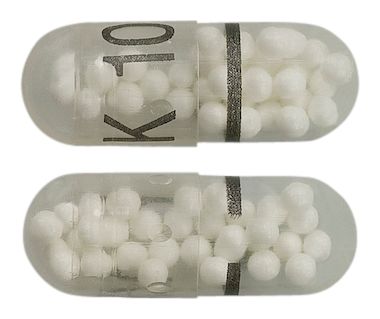
Images © Medicines Information Pty Ltd.
Do I need a prescription?
These medicines require authorisation for prescription from your doctor. It is Schedule 8: Controlled Drug.
- 20 capsules
- 28 capsules
- 60 capsules
Source: ARTG
Is this medicine subsidised?
This medicine is not listed on the Pharmaceutical Benefits Scheme (PBS). Talk to your pharmacist about how much it will cost.
Source: PBS
Reporting side effects
If you experience a side effect from this medicine, tell your doctor or pharmacist. Or report it directly to the TGA (Therapeutic Goods Administration).
You can report side effects to your doctor, or directly at Report an adverse event or safety problem (Opens in new tab)
Source: ARTG
Data sources
- Australian Health Thesaurus (AHT) (Opens in new tab) – Last updated on 4 November 2026
- Australian Medicines Terminology (AMT) (Opens in new tab) – Last updated on 4 November 2026
- Australian Register of Therapeutic Goods (ARTG) (Opens in new tab) – Last updated on 4 November 2026
- Pharmaceutical Benefits Scheme (PBS) (Opens in new tab) – Last updated on 4 November 2026
- Medicines Information Pty Ltd (Opens in new tab) – Last updated on 4 November 2026
Disclaimer
Healthdirect medicines information is not intended for use in an emergency. If you are suffering an acute illness, overdose, or emergency condition, call triple zero (000) and ask for an ambulance.
Reasonable care has been taken to provide accurate information at the time of creation. This information is not intended to substitute medical advice, diagnosis or treatment and should not be exclusively relied on to manage or diagnose a medical condition. Please refer to our terms and conditions (Opens in new tab).
Symptom Checker
Worried about your health?
Select a symptom, answer some questions, get advice