
Vyvanse™
Active ingredients: Lisdexamfetamine
Consumer medicine information
Read the CMI leaflet (Opens in new tab) for facts you need to know before, during and after taking your medicine.
Listen to the audio transcription of the CMI leaflet.
For more information about CMIs and how to read them, please visit How to read Consumer Medicine Information (CMI).
What this medicine is used for
Attention Deficit Hyperactivity Disorder (ADHD): VYVANSE is indicated for the treatment of Attention Deficit Hyperactivity Disorder (ADHD). Treatment should be commenced by a specialist. A diagnosis of Attention Deficit Hyperactivity Disorder (ADHD) implies the presence of hyperactive-impulsive or inattentive symptoms that caused impairment and were present before 12 years of age.,Need for comprehensive treatment programme: VYVANSE is indicated as an integral part of a total treatment program for ADHD that may include other measures (psychological, educational and social) for patients with this syndrome. Stimulants are not intended for use in the patient who exhibits symptoms secondary to environmental factors and/or other primary psychiatric disorders, including psychosis. Appropriate educational placement is essential and psychosocial intervention is often helpful. When remedial measures alone are insufficient, the decision to prescribe stimulant medication will depend upon the physicians assessment of the chronicity and severity of the patients symptoms.,Long term use: The physician who elects to use VYVANSE for extended periods should periodically re-evaluate the long-term usefulness of the drug for the individual patient.,Binge Eating Disorder (BED): VYVANSE is indicated for the treatment of moderate to severe BED in adults when nonpharmacological treatment is unsuccessful or unavailable. Treatment should be commenced and managed by a psychiatrist.,Need for comprehensive treatment programme: VYVANSE is indicated as part of a total treatment program for BED that optimally includes other measures (nutritional, psychological, and medical) for patients with this disorder. When remedial measures including psychotherapy are insufficient, the decision to prescribe stimulant medication will depend upon the physicians assessment of the chronicity and severity of the patients symptoms.,Limitation of Use: VYVANSE is not indicated or recommended for weight loss. Use of other sympathomimetic drugs for weight loss has been associated with serious cardiovascular adverse events. The safety and effectiveness of VYVANSE for the treatment of obesity have not been established. Prescribers should consider that serious cardiovascular events have been reported with this class of sympathomimetic drugs. The BED clinical trials were not designed to assess cardiovascular safety. While there is an accumulation of safety data with VYVANSE use in the ADHD population, this is of limited relevance regarding cardiovascular risk in the BED population. Given the higher cardiovascular risk associated with obesity, the BED population may be at a higher risk. See Sections 4.4 SPECIAL WARNINGS AND PRECAUTIONS FOR USE, Cardiovascular Disease and 4.2 DOSE AND METHOD OF ADMINISTRATION.,Long term use: For BED the initial treatment period is 12 weeks. Patients should then be observed to assess whether further treatment with VYVANSE is required. Periodic re-evaluation of the usefulness of VYVANSE for the individual patient should be undertaken. See Section 5.1 PHARMACODYNAMIC PROPERTIES, Clinical Trials.
Source: ARTG
Storage conditions
- Shelf lifetime is 3 Years
- Store below 25 degrees Celsius
Source: ARTG
How to use this medicine
Non-composite pack
This medicine contains one component only.
Component
- Capsule, hard
- Oral
- VYVANSE 20 mg capsule: ivory opaque body and ivory opaque cap, printed 'S489' and '20 mg' in black ink
Source: ARTG
Images
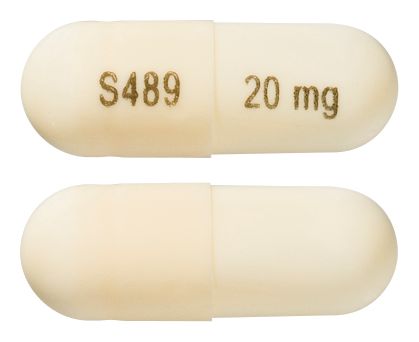
Images © Medicines Information Pty Ltd.
Do I need a prescription?
These medicines require authorisation for prescription from your doctor. It is Schedule 8: Controlled Drug.
- 30
Source: ARTG
Is this medicine subsidised?
This medicine was verified as available on the Pharmaceutical Benefits Scheme (PBS) on 1 August 2026, under PBS item code 11884L (Opens in new tab). Ask your pharmacist or doctor about your eligibility
Source: PBS
Pregnant or planning a pregnancy?
For the active ingredient: Lisdexamfetamine
You should seek advice from your doctor or pharmacist about taking this medicine. They can help you balance the risks and the benefits of this medicine during pregnancy.
Source: AHT
Reporting side effects
If you experience a side effect from this medicine, tell your doctor or pharmacist. Or report it directly to the TGA (Therapeutic Goods Administration).
You can report side effects to your doctor, or directly at Report an adverse event or safety problem (Opens in new tab)
Source: ARTG
Data sources
- Australian Health Thesaurus (AHT) (Opens in new tab) – Last updated on 3 August 2026
- Australian Medicines Terminology (AMT) (Opens in new tab) – Last updated on 3 August 2026
- Australian Register of Therapeutic Goods (ARTG) (Opens in new tab) – Last updated on 3 August 2026
- Pharmaceutical Benefits Scheme (PBS) (Opens in new tab) – Last updated on 3 August 2026
- Medicines Information Pty Ltd (Opens in new tab) – Last updated on 4 March 2026
Disclaimer
Healthdirect medicines information is not intended for use in an emergency. If you are suffering an acute illness, overdose, or emergency condition, call triple zero (000) and ask for an ambulance.
Reasonable care has been taken to provide accurate information at the time of creation. This information is not intended to substitute medical advice, diagnosis or treatment and should not be exclusively relied on to manage or diagnose a medical condition. Please refer to our terms and conditions (Opens in new tab).
Symptom Checker
Worried about your health?
Select a symptom, answer some questions, get advice