Common cold
A cold is a viral infection which affects the nose, ears and throat. There are more than 200 different types of viruses that can cause the common cold.


If you have a cold, the flu (influenza) or COVID-19, you can take different types of medicines to relieve your symptoms or help you recover more quickly.
If you are eligible, your doctor may prescribe antiviral medicines for the flu or COVID-19. Antivirals work best when you start taking them within the first 48 hours of developing flu symptoms or within 5 days of developing COVID-19 symptoms.
You can buy some of these medicines for symptom relief over the counter at pharmacies or supermarkets. Other medicines need a prescription from your doctor.
Your doctor or pharmacist will recommend medicines based on your symptoms, age and medical history.
Learn about cold, flu and COVID-19 medicine for children.
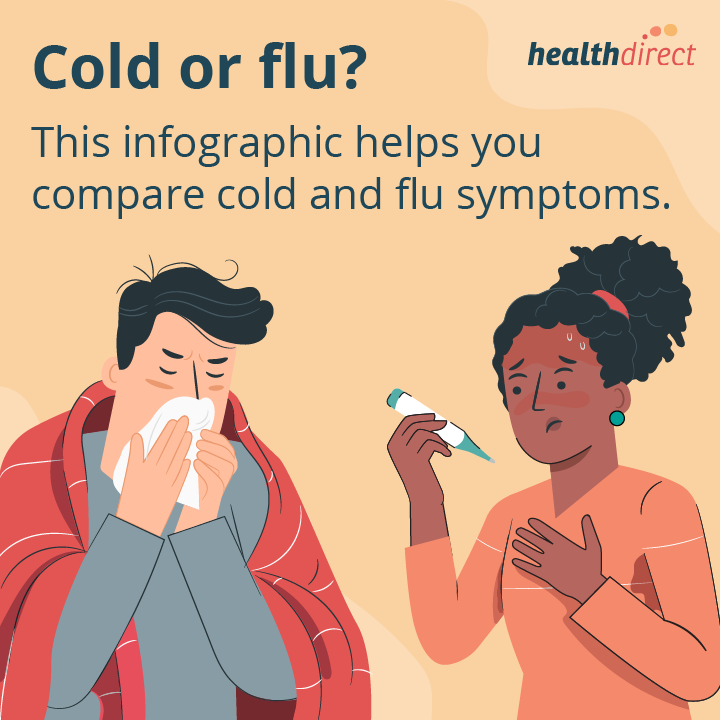
See this comparison of cold and flu symptoms.
Common medicines that may help manage your cold, flu or COVID-19 symptoms include:
Your doctor may also prescribe antiviral medicines if you have been diagnosed with the flu or COVID-19 and are eligible — these medicines are not recommended for every situation.
Common colds, the flu and COVID-19 are caused by viruses, not bacteria. Antibiotics only treat bacterial infections.
Your doctor won't prescribe an antibiotic for a viral illness, unless they think you have a bacterial infection as well.
Antivirals are also not prescribed if you have a cold.
Learn about cold, flu and COVID-19 medicine for children.
There are different medicines you might take for your cold, flu or COVID-19 symptoms.
Your doctor may recommend you take paracetamol or ibuprofen. You can buy them over the counter at your local pharmacy or supermarket.
Paracetamol works by blocking signals in the brain that control pain and fever.
Ibuprofen is a non-steroidal anti-inflammatory drug (NSAID). Ibuprofen blocks inflammation at the site of injury or illness, and reduces pain and fever.
Decongestants work by reducing swelling of the blood vessels in your nose. This clears your blocked or stuffy nose, making it easier for you to breathe.
Cough suppressants reduce your urge to cough by blocking the cough reflex in your brain. Check with your pharmacist before you take a cough suppressant or give one to your child.
Antihistamines work by blocking the effects of histamine — a chemical your body releases during a cold that causes symptoms like a runny nose, sneezing and watery eyes. While antihistamines alone aren't effective for colds, they can help relieve symptoms when combined with another medicine, such as a decongestant.
Ipratropium reduces the amount of mucus your nose produces.
Antivirals work by preventing viruses from replicating or spreading between your cells. There are antivirals for the flu and COVID-19. You need to meet certain conditions to take antivirals, such as being at higher risk of severe illness. Your doctor will advise if they are right for you.
There are many cold and flu products that include different mixes of medicines. Many are available over the counter at your local pharmacy or supermarket.
Remember to read the instructions and any warnings. Some may be specifically for night-time as they may contain ingredients that can make you drowsy. Discuss with your pharmacist or doctor before starting any new medicines, or taking combination products with other medicines, such as paracetamol or ibuprofen.
There are risks and side effects with all medicines, including over-the-counter medicines. Ask your pharmacist for advice on side effects before you start taking a new medicine. Always follow your doctor's advice when taking prescription medicines.
The most common side effect of paracetamol is an increase in some liver enzymes.
Rare side effects include:
Paracetamol overdose can cause severe and permanent liver damage:
There are many brands of paracetamol, including some combined with other medicines. To avoid overdose, check the strength and dose carefully.
Do not use more than one product with paracetamol at the same time. Read the label of the medicine before you take it. Follow your doctor's or pharmacist's advice.
You can safely take paracetamol if you're pregnant or breastfeeding.
Ibuprofen can cause side effects of:
There are some risks with ibuprofen, including if you:
Your doctor may recommend you don't take ibuprofen (and other NSAIDs) if you:
In rare cases, decongestants can cause hallucinations or seizures.
You should avoid decongestants if you:
You can safely take decongestants whilst breastfeeding, but they may reduce your milk supply (Opens in new tab).
Do not take intranasal decongestants for more than 5 days in a row.
Inhaled ipratropium can cause side effects that usually go away on their own, including:
Cough suppressants can cause the following side effects:
If you take cough suppressants, do not drive or operate any heavy machinery. You should also avoid alcohol as it can make you even more drowsy.
Some antihistamines, including diphenhydramine, can cause:
If you feel drowsy when taking an antihistamine, do not drive or operate any heavy machinery.
Nasal antihistamines can cause irritation in or around your nose.
You should see your doctor if you have a cold, the flu or COVID-19 and your symptoms are not getting better or are getting worse. See your doctor if you have another serious health condition that may get worse with your symptoms.
Preventing illness is the best alternative to getting sick and needing medicines.
There are ways you can try to prevent getting a cold, the flu or COVID-19:
Alternative treatments may also help relieve your symptoms:
Echinacea and vitamin D supplements do not improve common cold symptoms. If you already have symptoms, vitamin C supplements won't reduce their severity or make them go away faster.
You can call the healthdirect helpline on 1800 022 222 (known as NURSE-ON-CALL in Victoria). A registered nurse is available to speak with you 24 hours a day, 7 days a week.
Find out how we develop and review our content.
Last reviewed: August 2025


Worried about your health?
Select a symptom, answer some questions, get advice

