
Throat Cancer - Head and Neck Cancer Australia

Throat cancer is a term used for specific types of cancer affecting your throat. It is also known as oropharyngeal cancer.
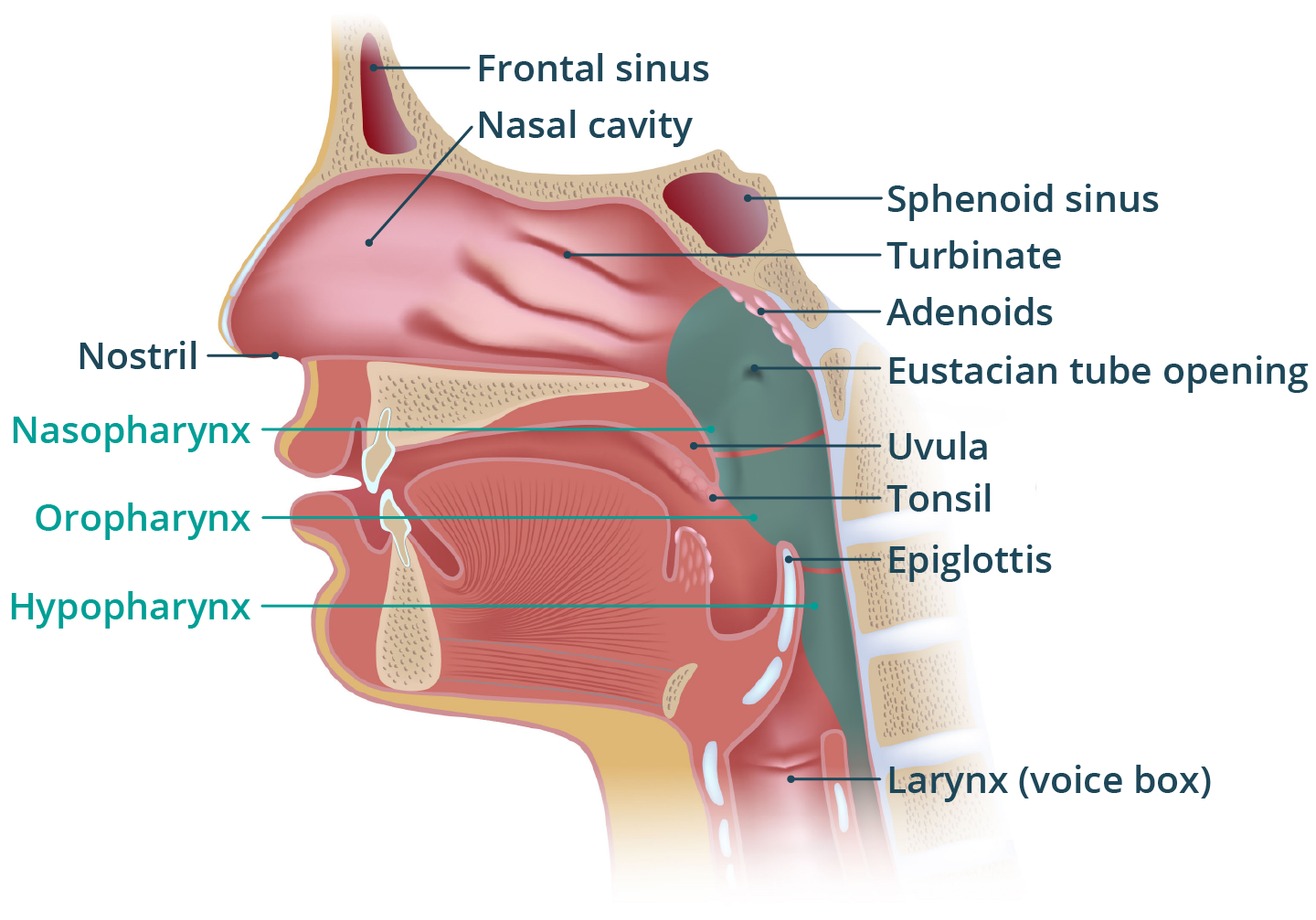
The throat (also called the pharynx) is a tube that runs from the back of the nose to the top of your food pipe (oesophagus) and airway (trachea).
Throat cancer includes tumours growing in any part of the pharynx. These cancers may affect different parts of the throat, including the:
Throat cancer is part of a broader group called head and neck cancers, which also includes:

A diagram of the nose and throat.
In the early stages, throat cancer may not cause any symptoms.
Common symptoms may include:
These symptoms can have many causes and are often not due to cancer. It is important to see your doctor if they persist or you are concerned.
You may also notice symptoms that should be checked promptly by your doctor, including:
It's not clear what causes throat cancer. Some factors may increase your chance of developing it. You may have a higher chance of developing throat cancer if you:
See your doctor if you have symptoms of throat cancer, especially if you have factors that increase your chance of developing it.
Also see your doctor if your symptoms:
It is important not to delay seeing your doctor. Finding throat cancer early can help improve treatment options and outcomes.
Your doctor will ask about your symptoms and examine you, including looking in your throat.
Your doctor may refer you to a specialist such as an ear, nose and throat (ENT) specialist or a head and neck surgeon. You may also see an oncologist (cancer specialist) to discuss treatment options.
Some tests that your doctor may refer you for include:
These tests can help find cancer and determine its stage.
The main treatment for throat cancer is surgery to remove the cancer or radiotherapy to kill cancer cells. You might also be offered chemotherapy, usually together with radiotherapy.
Your treatment options will depend on:
Your healthcare team may work with a multidisciplinary team of health professionals who have experience treating cancer.
Depending on your situation, you may choose treatments that focus on managing symptoms and maintaining your quality of life, rather than aiming to treat the cancer itself.
Living with throat cancer may be challenging for you and the people who support you.
Speak to your healthcare team if you are noticing signs of depression or anxiety or if you need some extra help.
Some treatments for throat cancer may lead to complications such as:
There are ways to help reduce the impact of these problems on your quality of life. Talk to your doctor about what to expect and the support services that may help you.
Throat cancer treatment may include chemotherapy or chemoradiotherapy, which can cause neutropenia. Neutropenia is a condition that involves a low level of a type of white blood cell important for fighting infection.
If you have neutropenia with a fever, seek immediate medical attention as it can be life-threatening.
Read more on neutropenia and fever.
See your doctor if you have throat cancer and notice complications of treatment.
Throat cancer can't always be prevented. There are steps you can take to reduce your chance of developing it:
You can help reduce your chance of HPV infection by practising safe sex using barrier protection, such as condoms and dental dams. You can also ask your doctor about the HPV vaccine, which is free under the National Immunisation Program (Opens in new tab) for people under 26 years of age.
You can also call the healthdirect helpline on 1800 022 222 (known as NURSE-ON-CALL in Victoria). A registered nurse is available to speak with you 24 hours a day, 7 days a week.
Find out how we develop and review our content.
Last reviewed: June 2026


Worried about your health?
Select a symptom, answer some questions, get advice